Table of contents
Artificial Intelligence is one of the hottest topics in 2023. Unlike past trends such as web 3.0 or the metaverse, Generative AI has already become a part of many people’s daily lives and is likely here to stay.
However, unlike the past, artificial intelligence raises some doubts and fears: will it take away our jobs? Is it dangerous? Is it truly reliable?
Let’s try to answer these questions by understanding what artificial intelligence is and how it works.
What is Artificial Intelligence in Technical Terms
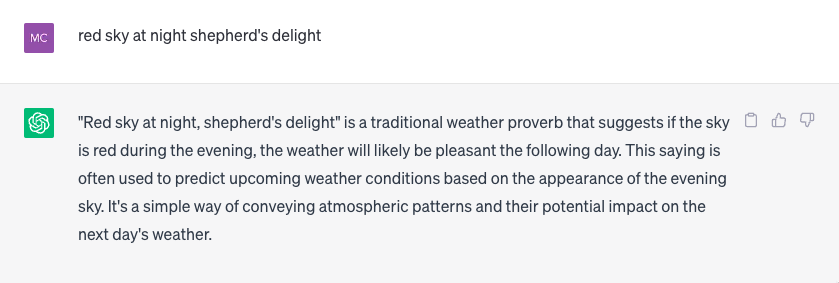
Artificial Intelligence is a branch of computer science that aims to create machines (hardware) and systems (software) that simulate human intelligence: perceiving, understanding, learning, and decision-making.
Unlike “standard computing,” AI programmers don’t create software where every behavior is predicted and programmed (and if it’s not, it’s a “bug”), but they create algorithms that are learning techniques. Thus, an algorithm processes a vast amount of data from which the system derives its own understanding and reasoning capabilities.
The means by which an Artificial Intelligence system “learns on its own” is through Machine Learning: the system is provided with a large number of data (often Big Data) to work with. Using mathematical, statistical, and other models, the system can extract patterns or other hidden (probabilistic/forecast) data that were not explicit in the provided data.
Here lies the ability of machines to learn: by analyzing data, they can discover new data (not provided initially) or new patterns.
The input data given to the machine and the results obtained can be supervised or unsupervised by a Data Scientist. This leads to two types of Machine Learning: supervised and unsupervised.
An advanced form of Machine Learning is Generative Artificial Intelligence (such as ChatGPT, MidJourney, etc.). Their most surprising feature is their ability to understand and “speak” our language; they interpret and provide responses in our language, not in a programming language or binary code.
What is Artificial Intelligence in Less Technical Terms
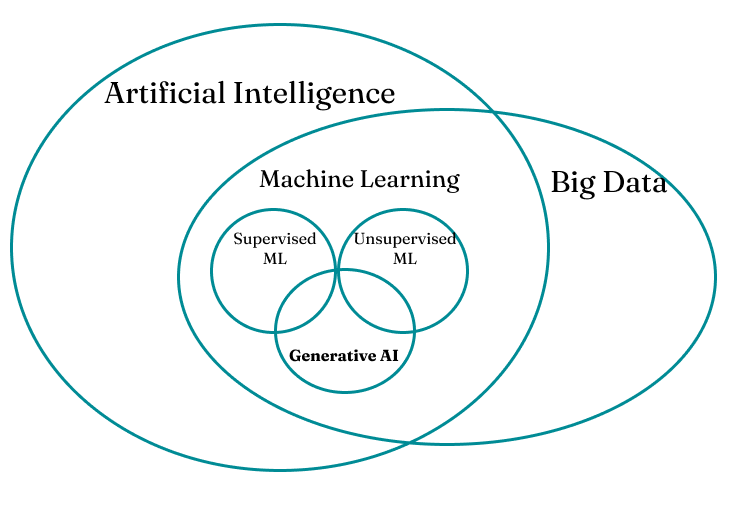
Prompt: Red sky at night
As explained by Professor Stefano Quintarelli (a member of the European AI group and an internet pioneer in Italy), artificial intelligence can be simplified through the proverb “Red sky at night, sailor’s delight.”
Almost everyone has learned this “algorithm”: if we have the data of a “red sunset,” we predict clear weather for the following day.
If we have the data of a “sunset with dark clouds,” we predict that the following day will likely be rainy.
We make this prediction because this correlation almost always repeats itself. Therefore, we’ve learned a “hidden data”: it’s not a definite prediction, but a result of a correlation extrapolated from a series of data.
Artificial intelligence simulates this prediction exactly: it’s provided with billions of data, seeks patterns and correlations, records new data, and makes predictions based on them.
In the case of supervised Machine Learning, this always occurs based on parameters given by a human.
Generative artificial intelligence is not all of artificial intelligence
If you’re in a music group and someone asks what you do, you wouldn’t say “I play music,” but rather that you play (for example) the guitar.
Similarly, if you use ChatGPT, you’re not using Artificial Intelligence, but one of the tools of Artificial Intelligence: a chatbot that uses Generative AI.
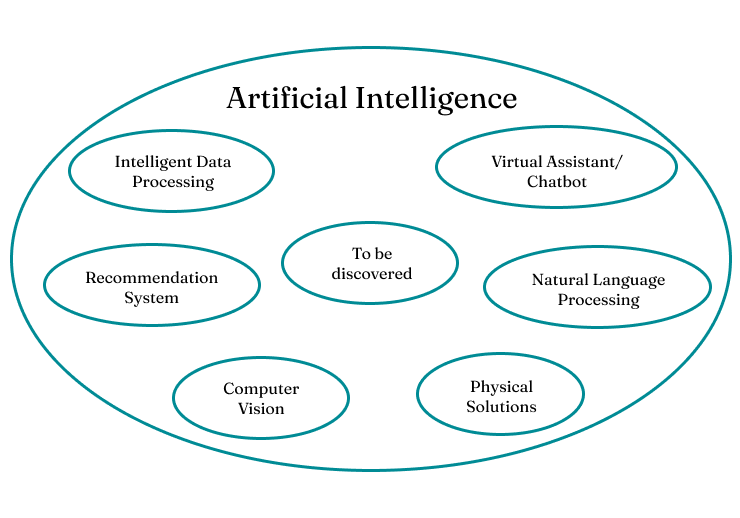
The Artificial Intelligence Observatory of Politecnico di Milano has identified six classes of AI applications based on their purpose:
- Intelligent Data Processing (e.g., medical/pharmaceutical solutions)
- Virtual Assistant/Chatbot (e.g., ChatGPT and other chatbots)
- Recommendation System (e.g., algorithms in social networks or e-commerce)
- Natural Language Processing (e.g., ChatGPT or generative image and video systems like MidJourney)
- Computer Vision (e.g., facial biometric recognition on smartphones)
- Physical Solution (e.g., autonomous driving, smart appliances, autonomous robots)
The potential applications of Artificial Intelligence, however, are still vast and not all explored.
Is artificial intelligence reliable?
The result of an Artificial Intelligence solution isn’t like a calculator’s result: it doesn’t calculate; it makes predictions by “mixing” the most probable data.
Returning to one of the initial questions: is Artificial Intelligence reliable?
The answer is: probably yes. It’s as reliable as weather forecasts.
Their accuracy depends on who’s making the predictions and on what data and statistical models they’ve based those predictions.
And despite the confidence expressed by tools like ChatGPT, the results should be taken critically, not as absolute truth.
Will generative AI take our jobs?
There’s a fear that AIs will completely replace us, leaving many jobless.
Remember that someone has to build and maintain these artificial intelligences. Additionally, who will provide the correct input to the various response generators?
And who will ensure that the “predictions” provided are reliable and suitable for the specific needs they address?
AIs won’t take our jobs, but they will automate or expedite tasks and likely create other specialized jobs in more technical contexts.
The socio-economic impact could be significant, but it’s important to emphasize the responsibilities of developers, organizations, and institutions that create and fund these IT solutions.
Responsibility is, and always will be, human.
Is AI dangerous?
Artificial intelligence is just a technology, so it’s not inherently dangerous. However, depending on its conscious or unconscious use, it comes with risks.
Its use in medical and pharmaceutical fields is extremely powerful. For example, an AI-based algorithm designed a new drug in 46 days compared to the 8 years a medical team would take.
Its use in other areas with less supervision, like mental well-being with cases like the Replika AI chatbot, can lead to potentially harmful consequences.
To mitigate risks, the solutions are to train algorithms carefully, supervise them, and use the tools consciously.
Similar to social networks and nuclear energy, targeted use can lead to significant improvements in quality of life, but misuse or improper use can have serious consequences.
Human control of artificial intelligence
If you’re looking to rely on an agency that uses AI tools consciously, don’t hesitate to contact us. A human from our team will respond.
Table of contents