
Table of contents
If you’re here, you’re likely navigating the web without any issues; however, you may not be aware that some people aren’t as fortunate as you. Let’s delve into the importance of having an accessible website and the myriad advantages it offers. The goal is to raise awareness among users on this matter and contribute to making the Internet a more inclusive environment for everyone.
Why Accessibility Is Crucial?
Imagine navigating a website without the ability to see, hear, or use a mouse or keyboard. This is the daily reality for millions of users worldwide.
An estimated 1.3 billion people globally, or 16% of the world’s population, live with significant disabilities (WHO – World Health Organization, 2022). This number is expected to increase, especially due to the aging population.
It’s easy to imagine how many people can be excluded from the web, especially if websites are not designed with proper attention to accessibility.
Digital Inclusivity
In fact, nearly one in four people with disabilities does not use the web. This means that a significant portion of the disabled population lives a severely limited life due to the crucial role the internet plays in our society. This is not an individual choice but a consequence of the poor accessibility of websites.

Let’s consider a practical example. A visually impaired person needs to purchase a new vacuum cleaner, so they begin an internet search to evaluate different models. Since only 3.2% of online sites are truly accessible, their ability to make a comprehensive assessment is significantly reduced. They may only find one or two websites where they can make informed evaluations and proceed with the purchase. Consequently, all other inaccessible websites lose a potential sale or conversion.
Legal Obligations
The European Union has imposed strict accessibility standards for websites and mobile applications through Directive (EU) 2016/2102. This directive, aimed at ensuring that digital services are accessible to people with disabilities, requires member states to ensure that websites and mobile applications of public entities comply with accessibility standards.
Currently, in Italy, ensuring the accessibility of websites belonging to the public administration is mandatory. Furthermore, since June 28, 2022, this obligation has also extended to private companies with a turnover exceeding 500 million in the last 3 years.
Another deadline is approaching on June 28, 2025, when all companies (excluding micro-businesses with fewer than 10 employees or a turnover below 2 million) are required to comply with the same accessibility requirements. This regulatory evolution aims to promote a more inclusive and accessible digital environment for a broad spectrum of users.
Finally, on October 5, 2023, new Web Content Accessibility Guidelines (WCAG 2.2) were published by the Web Accessibility Initiative (WAI).
Who Are People with Disabilities?
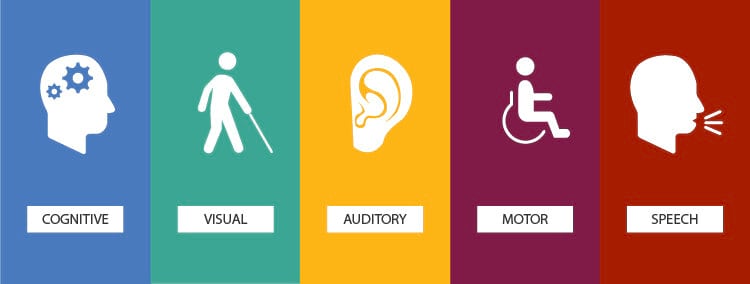
Accessibility covers a wide range of disabilities, including visual, auditory, physical, vocal, cognitive, language, learning, and neurological impairments. They are typically categorized into five main groups:
- Motor Disabilities: Mobility or motor control issues.
- Auditory Disabilities: Hearing difficulties or deafness.
- Visual Disabilities: Visual problems or blindness, including color perception difficulties.
- Language Disabilities: Difficulty in conveying or understanding messages.
- Cognitive Disabilities: Learning difficulties or memory problems.
So far, we’ve discussed only permanent disabilities. It’s essential not to forget about:
- Temporary Disabilities: Short-term injuries or illnesses (e.g., browsing with a cast on one hand or visual difficulty due to conjunctivitis).
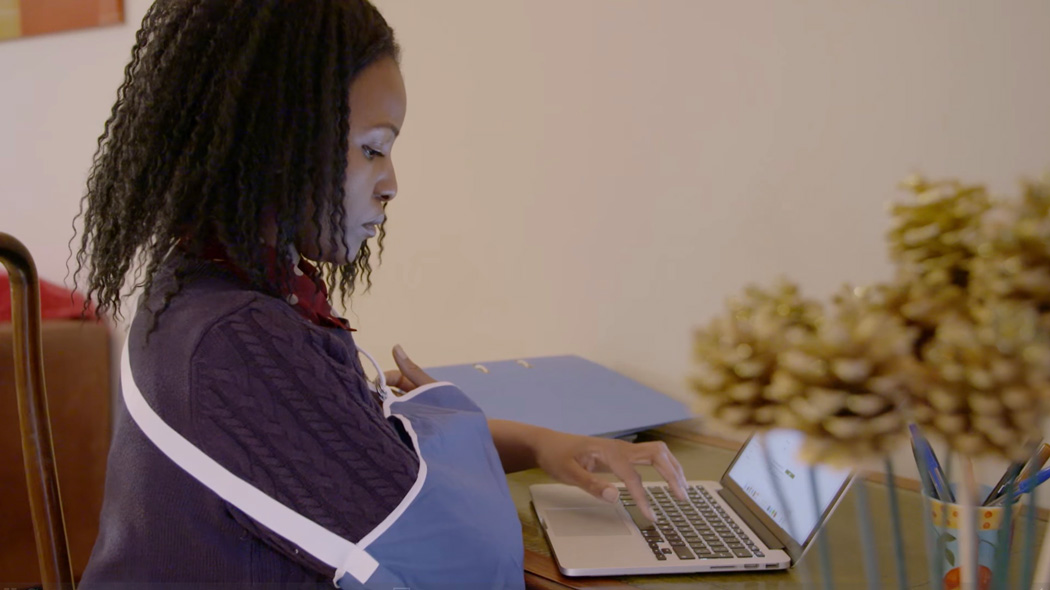
Source: Tetralogical
- Situational Disabilities: Being in a condition where ordinary actions are challenging (e.g., browsing while holding a child or dealing with screen glare).

Therefore, in addition to involving the 16% of the world population with permanent disabilities, accessibility extends to an even broader audience, considering those experiencing temporary or situational disabilities.
Accessibility vs. Usability
It’s essential to clarify the difference between accessibility and usability. Accessibility involves removing limits and barriers for people with disabilities, while usability corresponds to how easily everyone can use a site, regardless of disabilities. Both are crucial to ensuring a positive browsing experience.
Let’s provide two examples to highlight the difference and synergy between accessibility and usability.
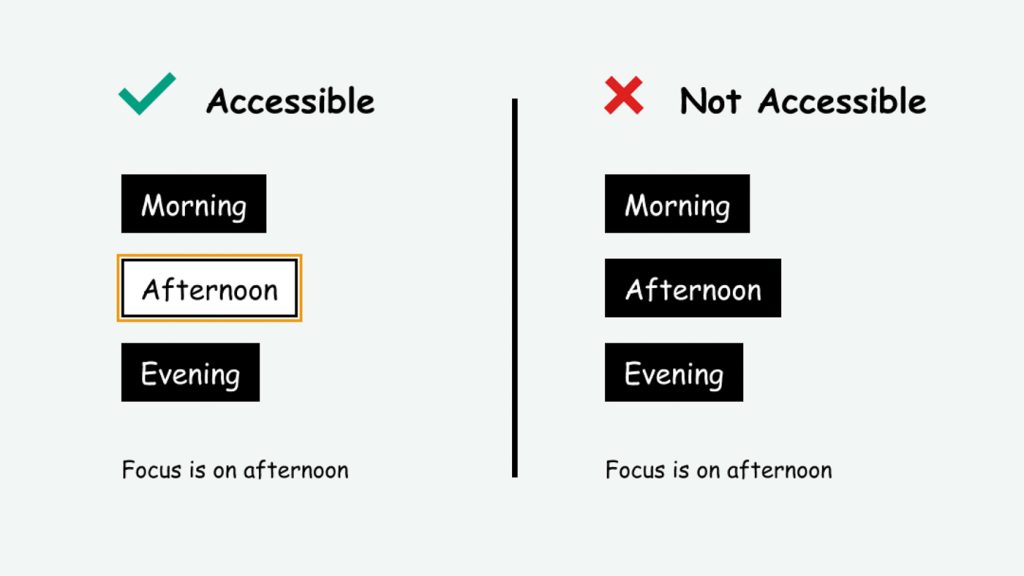
1. Visible Focus:
This example underscores the synergy between accessibility and usability, emphasizing how a visible focus significantly improves the browsing experience for keyboard-only users.
Left side of the image: Clearly shows how a person can easily identify an element on the page due to the visibility of the focus.
Right side of the image: Highlights the difficulty of identifying the current element when the focus is not visible.
2. Accessible Form:
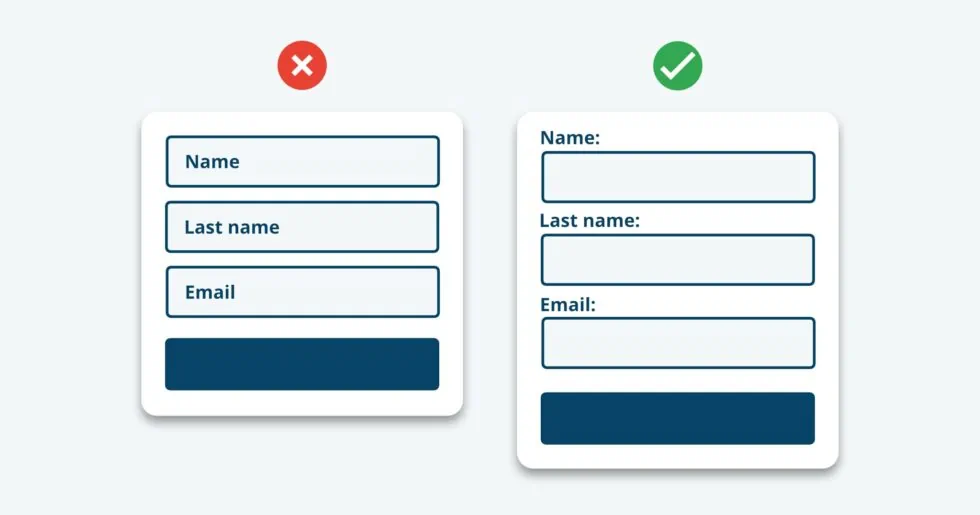
A well-designed contact form is both accessible and usable. Clear suggestions, real-time validations, and well-positioned labels benefit not only individuals with cognitive disabilities but also enhance the overall experience for all users.
Placing field labels outside input fields, as opposed to using placeholders (Name, Surname, Email, etc.), addresses accessibility issues where placeholders disappear as users type. This simple modification can make contact forms more accessible.
Accessibility: A Benefit for All
It’s interesting to note that developing a web project that includes people with disabilities can bring benefits beyond accessibility. A more accessible site is easier to navigate for all users, regardless of their abilities. Clear and well-structured content fosters an optimal user experience, improving user retention and reducing bounce rates.
SEO Benefits
Accessibility is also positive for search engines. Accessibility principles often align with SEO best practices, including:
| SEO Benefits | Benefits for users with disabilities |
|---|---|
| Logical and consistent site structure and layout | This helps users understand the structure of the site and its content, simplifying navigation. |
| Appropriate use of HTML markup elements, such as headers (<h1>, <h2>, etc.). | This helps users understand the structure of the site and its content, simplifying navigation. |
| Accessible multimedia through descriptive alternative texts (alt text) | People with visual disabilities can understand the content of images. |
| Readable text with sufficient contrast to the background | This improves readability, especially for those with visual impairments. |
| Visible focus | Improves keyboard navigation and highlights interactive elements for users of assistive technologies. |
These are just a few examples that, besides benefiting SEO, improve the browsing experience on web pages. Search engines like Google reward websites offering a good user experience, including those accessible to people with disabilities. Therefore, enhancing site accessibility can have a positive impact on search result rankings and, consequently, the overall performance of the website.
Conclusion: Accessibility as an Opportunity for Businesses
For businesses with outdated websites, compliance with accessibility regulations will not only become a legal obligation but also a strategic opportunity.
- Wider Market: Making sites accessible opens up to a broader audience, including people with disabilities. This is not just an inclusive gesture but also expands the potential target market.
- Improvement of Corporate Image: An accessible website conveys a message of social responsibility, enhancing the company’s image and reputation. It signals an active commitment to inclusion and social equity.
- SEO and Usability Benefits: Web accessibility often aligns with SEO best practices. An accessible site is generally more organized, clearer, and easier to navigate, enhancing user experience and promoting better search engine rankings.
- Legal Compliance and Risk Reduction: With new regulations, ensuring accessibility will become a necessary requirement. Adapting now helps prevent potential penalties and reduces the risk of legal action.
- Innovation and Competitiveness: Adapting a website to be more accessible can stimulate innovation and provide a competitive advantage. Companies that adopt these standards early position themselves as leaders in digital inclusivity.
Call to Action: We encourage all companies to view accessibility not as a burden but as an investment in the future. It’s a strategy that pays off in terms of market reach, reputation, compliance, and digital innovation.
Adapting to accessibility is a winning move for companies: it not only fulfills legal and moral obligations but also brings tangible benefits in terms of target users, corporate image, SEO positioning, and digital innovation.
The era of accessibility is here: it’s time for companies to fully embrace it. Antartika can assist you in this transition: contact us to learn more!
Table of contents

