Table of contents
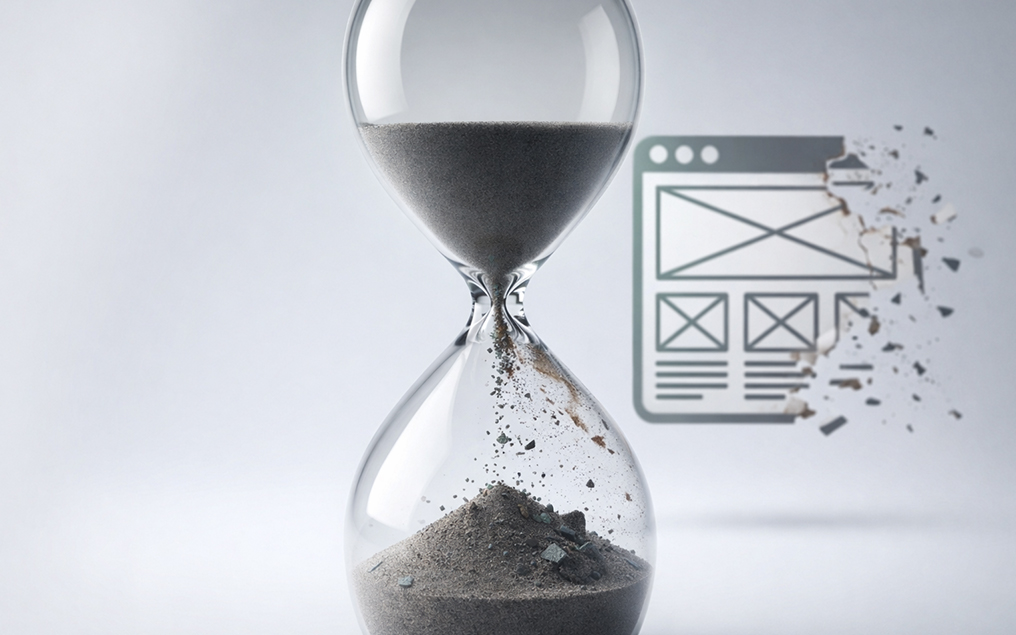
In the digital world, 4 years is an eternity: a website may still work, but no longer be competitive. Sooner or later, this leads to an inevitable question: when should you redesign your website?
In the physical world, signs of aging are easy to spot: a building facade that needs repainting, a car struggling to start, a machine consuming too much energy. Online, however, decline is often silent.
Many business owners still see a website as a “one-time investment” — a static asset meant to last forever. In reality, a website is dynamic software immersed in an ecosystem — the web — that evolves at incredible speed. Standing still while the digital world moves forward inevitably leads to progressive digital obsolescence.
So how can you tell whether your website is still driving business growth or slowly becoming a liability? This guide will help you assess the health of your online presence.
1.
Is Your Website Still Generating Results?
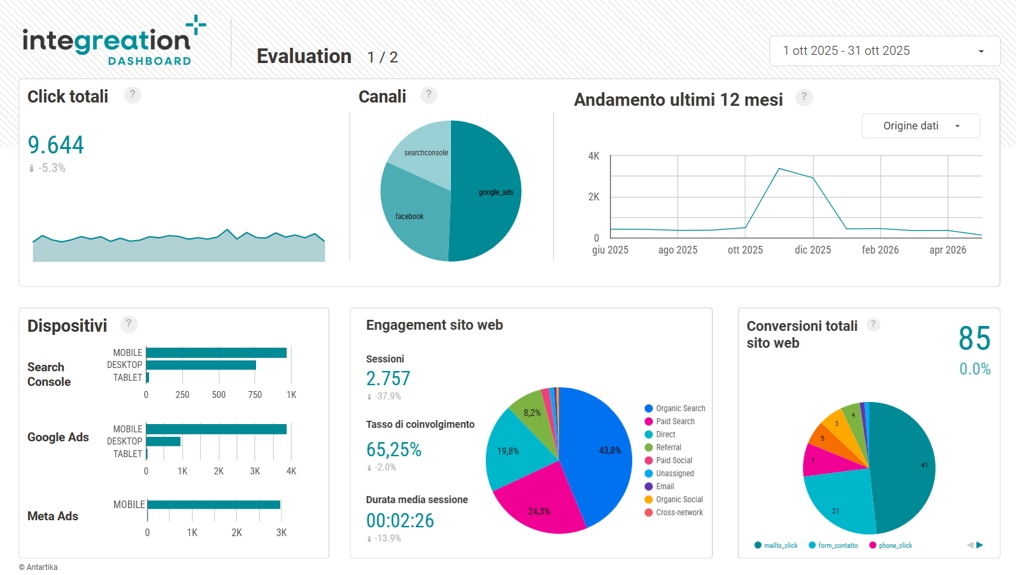
The first question isn’t about design — it’s about results.
Is your website still generating leads, inquiries, or sales?
If your numbers are steadily declining — while your market remains active — the problem may not be your business, but the tool itself.
Website decline rarely happens overnight. In most cases, a website gradually loses effectiveness over time.
To evaluate it properly, analyze the four pillars of digital health:
- Visibility (Can people still find you on Google?)
- Speed (How long does your website take to load?)
- Security (Is it updated and protected?)
- User experience (Is it intuitive and easy to use?)
When one of these pillars weakens, the entire system starts losing performance.
2.
Why SEO Is Not a Permanent Achievement:
The Signs of an Obsolete Website
Many people think reaching the first page of Google is a final destination.
In reality, it’s only the beginning.
Google rewards websites that are active, updated, and technologically aligned with modern standards — especially in terms of technical performance and user experience.
According to the official Google Search Central guidelines, these aspects directly influence how the quality of a website is perceived.
A static website, even one that once performed well, gradually loses authority and risks becoming obsolete.
Not because it “stops working,” but because it is progressively overtaken by competitors that are faster, more updated, and more relevant in the eyes of search algorithms.
This means:
- competitors outrank you
- traffic decreases
- opportunities shrink
The decline is gradual, but constant.
If your visibility is dropping, it’s probably not a coincidence — it’s a signal.
If you feel your online visibility is declining, discover how to climb back to the top with Search Engine Marketing.
3.
Slow Websites:
When Speed Becomes a Cost for Your Business

A slow website is not just frustrating. It creates real business costs.
Today’s average user:
- leaves after just a few seconds
- browses mainly from mobile devices
- expects instant responses
If your website takes more than 2–3 seconds to load, you are potentially losing customers before they even see what you offer.
Even a few extra seconds of waiting time can increase bounce rates and reduce conversions.
Slowness is often the first technical symptom of an aging website: outdated code, unoptimized images, or inadequate hosting infrastructure.
And every extra second is a missed opportunity.
Learn more about the importance of having a fast website.
4.
Outdated Websites:
Technical Risks and CMS Security
If your website uses a CMS such as WordPress, maintenance is not optional.
It is essential.
Plugins, themes, and the core system are constantly updated to:
- fix bugs
- improve performance
- close security vulnerabilities
- add new features
An outdated website is not simply “old” — it is vulnerable.
And that creates real risks:
- cyberattacks
- data loss
- reputational damage
Neglecting maintenance is like leaving the front door open.
Here are 4 essential reasons to keep your WordPress website updated.
5.
Is Your Website Still Up to Date?
Design, Mobile, and New User Habits
The internet changes faster than most businesses realize.
A website that was effective just a few years ago may now feel outdated in several ways.
Real Mobile-First Design
It is no longer enough for a website to simply be “responsive.”
It must be designed with smartphones as the primary experience.
For years, Google has adopted a mobile-first approach, meaning it primarily analyzes and indexes the mobile version of websites. As a result, a poorly optimized mobile experience can affect not only usability, but also search visibility.
Read Google’s official documentation on mobile-first indexing.
New Search Systems and AI
Artificial intelligence technologies are changing the way content is interpreted, selected, and displayed online.
Modern search systems no longer focus only on keywords. They also evaluate structure, clarity, performance, and the overall quality of the user experience.
Because of this, older websites risk becoming progressively less readable, less competitive, and less visible in emerging search environments.
Outdated technical infrastructures, poorly organized content, or weak performance can make it harder for these systems to properly understand and value a website.
Visual Trust
Design communicates reliability within seconds.
Many users judge a company’s credibility during the first moments of navigation.
An outdated website unconsciously sends a message:
“We are not up to date.”
And that directly influences purchasing decisions.
New Integrations and Digital Tools
A modern website is no longer just an online brochure.
It is part of a digital ecosystem made of analytics, automations, CRM platforms, and marketing tools.
Older platforms often struggle to integrate efficiently with these technologies, limiting business growth.
6.
When Should You Redesign Your Website?
Update or Complete Rebuild?

When technological evolution and user expectations are considered together, one thing becomes clear:
On average, after 3–4 years many websites begin to show technological, strategic, or communication limitations.
Beyond that point, small adjustments are often no longer enough.
Common consequences include:
- increasing maintenance costs
- declining performance
- compromised user experience
In many cases, a full website redesign is more efficient than continuing to patch an outdated digital ecosystem.
It is not simply an expense.
It is a competitive realignment.
Conclusion: A Website Is a Living Asset
A website is not a digital brochure.
It is an active business tool that must evolve together with your company.
Recognizing the right moment to update it does not mean you made a mistake.
It means you understand the market.
And above all, it means you are not leaving opportunities on the table.
Want to know if your website is still competitive?
Don’t judge it only by aesthetics. The data tells a much bigger story.
Contact us for a professional website assessment: we will analyze performance, visibility, and critical issues to help you make a concrete and informed decision — without unnecessary waste.
Table of contents


