Table of contents
Making decisions based on concrete data, not feelings, is the only way to set up a truly effective digital strategy and optimize your investments.
However, in recent years, the number of obstacles preventing the collection of reliable and accurate data (limitations of certain browsers, reduced cookie duration, ad blockers, iOS updates, etc.) has increased, negatively impacting digital marketing activities.
Server-side tracking is emerging as a solution capable of recovering data and improving its quality: there is no longer any doubt that the implementation of server-side tracking will be at the heart of Web Analytics in the future.
But what is it? What are its advantages compared to client-side tracking, the most widespread implementation to date?
Client-side Tracking vs. Server-side Tracking: The Differences
Client-side tracking
With client-side tracking, tracking scripts are executed in the user’s browser.
These scripts send data directly to the various servers of the services you use (e.g., Google Analytics, Google Ads, Meta, etc.), which respond by installing cookies or other elements in the user’s browser. With client-side tracking, all these calls are managed by the browser.

Server-side tracking
With server-side tracking, data is first sent to a cloud server: this server processes the data and then sends it to the various service providers (e.g., Google Analytics, Google Ads, Meta, etc.).
In this case, there is no longer a direct data transfer from the browser to the various external servers but a cloud server acting as a proxy between the website and third-party platforms. Tracking is managed and executed by the server.

Benefits of Server-side Tracking over Client-side Tracking
1) Improved Website Performance
As we explored in an article on the importance of having a fast website, site performance is crucial for improving the user browsing experience and increasing the likelihood of obtaining a contact or sale.
By reducing the number of scripts loaded on the page, server-side tracking allows for a decrease in client-side weight, resulting in faster load times and thus benefits in website performance.
2) SEO Benefits
In addition to improving website performance, faster load times will also benefit SEO: load speed is a ranking factor on Google and contributes to determining a website’s position in search results.
This is why server-side tracking can help you increase your search engine visibility compared to competitors.
3) Greater Quantity and Quality of Tracked Data
Server-side tracking has the significant advantage of avoiding restrictions from certain browsers and ad blockers, as well as circumventing cookie duration limits.
According to a July 2023 report, 32.8% of internet users use ad blockers, tools that filter web content and block ads. In Italy alone, the percentage of users using ad blockers is 27%.
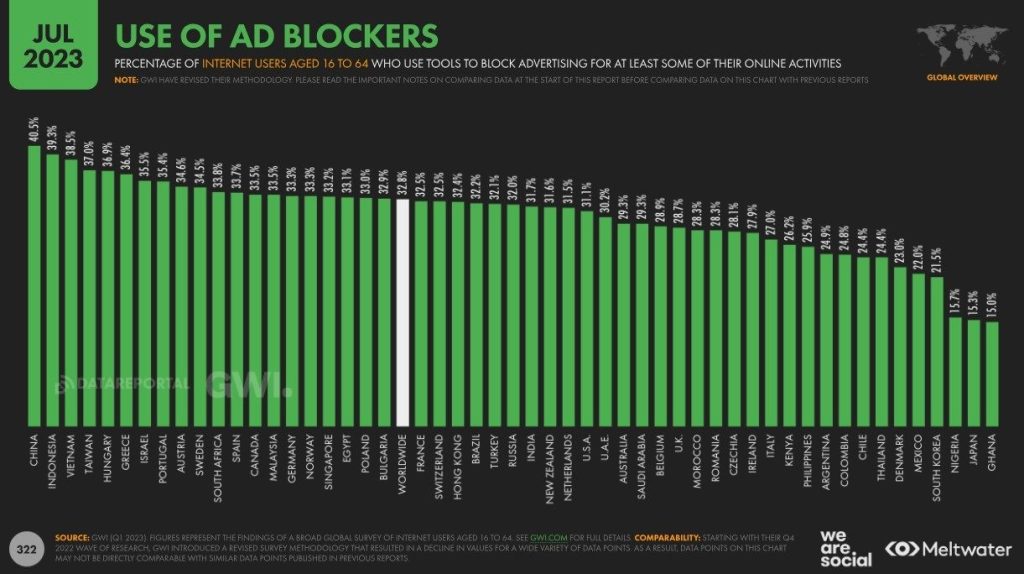
In addition to blocking ad displays, ad blockers sometimes prevent the correct collection of data for analysis purposes.
Server-side tracking can avoid these restrictions, increasing the quantity and quality of the data you record.
Moreover, several browsers (such as Safari and Firefox) have introduced Intelligent Tracking Prevention (ITP) systems that limit cookie duration in the browser to 7 days. In some cases, the duration can be reduced to just 1 day: this happens on Safari if the referring domain is a known tracker (e.g., facebook.com) and if the URL contains query parameters (e.g., fbclid).
We already discussed this topic in 2021 in an article on the impact of iOS 14.5 on Facebook campaigns.
But what does this entail? To understand this, let’s first see what cookies are and what they are used for.
Cookies are text files installed in the user’s browser. One of their uses is to collect information about the user’s behavior and preferences.
For example, take a user who visits your website where you have configured the Meta pixel.
When the user accesses your website, the pixel will install a cookie in their browser and assign them an identifier, collecting information about their behavior.
If the user then visits a website different from yours but also using the Meta pixel, the identifier assigned by the pixel will remain the same: this way, Meta can build a comprehensive overview of the various sites visited by the user and their preferences, recording valuable information for campaign targeting.
What are the effects of ITP systems?
Limiting cookie duration means preventing the correct attribution of conversions to ad campaigns, as tools like Google Ads or Meta will not be able to record conversions occurring beyond a certain number of days after the ad interaction.
This means that your campaign results will be underestimated, and you risk basing your strategy on incorrect data.
Moreover, campaign targeting will be less precise because cookies (as mentioned above) are also used to create a user profile and record information about their behavior and interests.
The good news is that server-side tracking can circumvent these cookie duration limits by allowing the setting of first-party cookies and extending their duration: this way, you can “recover” those conversions generated by campaigns that would not be correctly attributed to ads with client-side tracking.
Furthermore, you can make your campaign targeting more precise and set up longer-lasting remarketing segments to show personalized ads to users who have already interacted with your website.
4) Facebook Conversion API
The Conversion API is a server-side tool introduced by Meta to recover data that the pixel alone can no longer record. It is not an alternative to the pixel but an integration.
As seen in the previous point, various ad blockers and browser limitations are making it increasingly difficult for cookie-based tools like the Meta pixel to track data: the result is a reduction in collected data and, consequently, less effective ad campaigns.
As a server-side solution, Meta’s Conversion API can be implemented via server-side tracking.
5) Control and Greater Data Security
By collecting and processing data on the server before sending it to various platforms, server-side tracking acts as a “filter” and allows full control over the management of collected information: it is possible to choose which data to share with different external providers, thus ensuring greater protection of sensitive data.
Moreover, server-side tracking significantly reduces the risk of data loss or theft that could be exposed by the browser.
What We Do at Antartika
Server-side tracking requires more advanced technical know-how, and its implementation is more complex than simple client-side tracking.
At Antartika, we have chosen to implement server-side tracking using Google Tag Manager and stape.io, a popular hosting service for the GTM server container.
Stape.io presented itself as an excellent alternative to using other services or setting up a proprietary server, particularly due to reduced implementation times.
Using Google Tag Manager and Stape.io allowed us to easily move server-side tracking for services like Google Ads and Meta and implement Facebook’s Conversion API,
- recovering valuable data for our campaigns,
- reducing website load, and
- contributing to better SEO positioning.
Are you interested in implementing server-side tracking on your website? Contact us for a consultation.
Table of contents